'Feral Grace'
Solo Exhibition By *Zacharias Papantoniou
Curation & Text By *Konstantinos Th. Spyropoulos
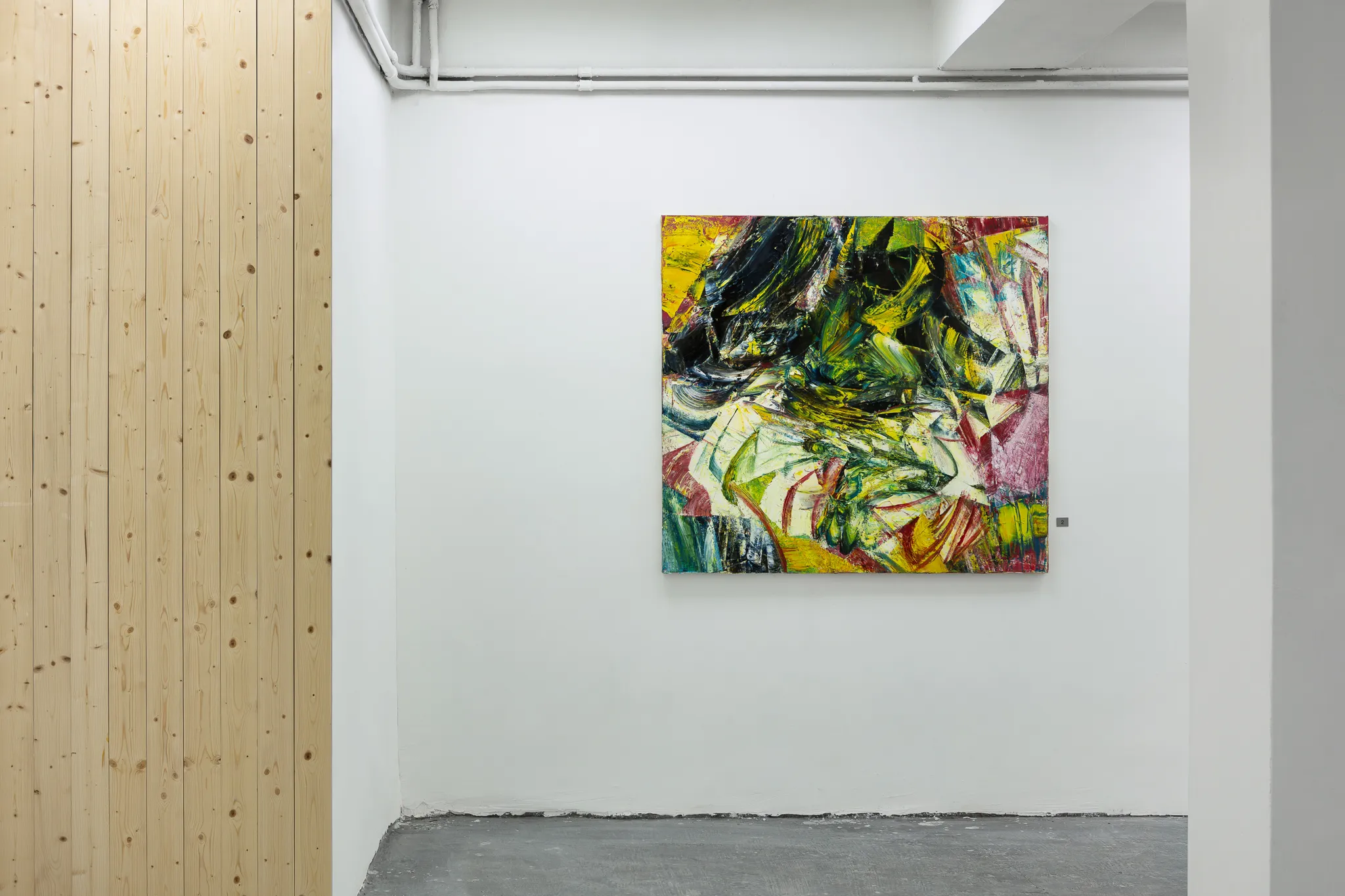
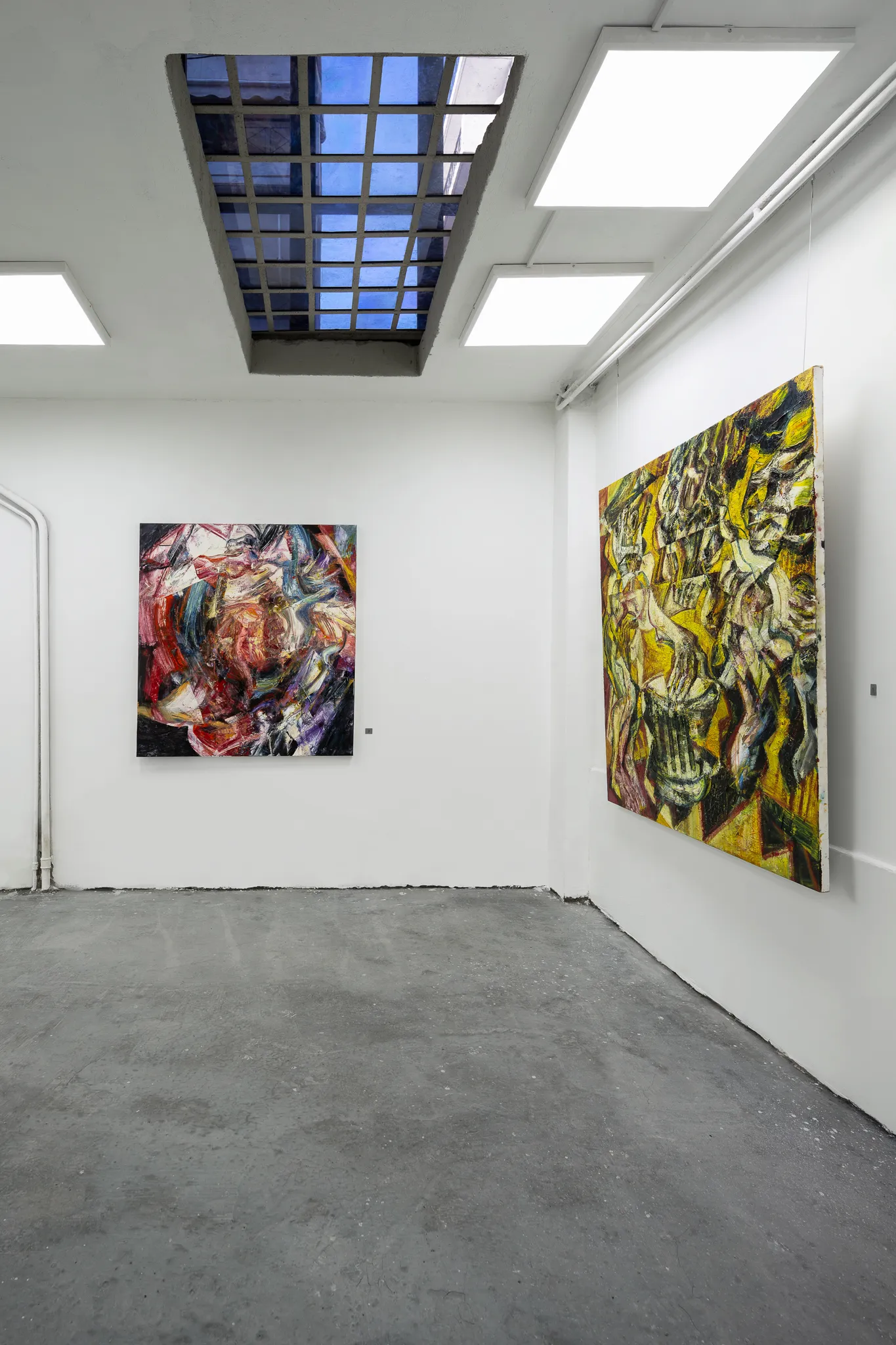
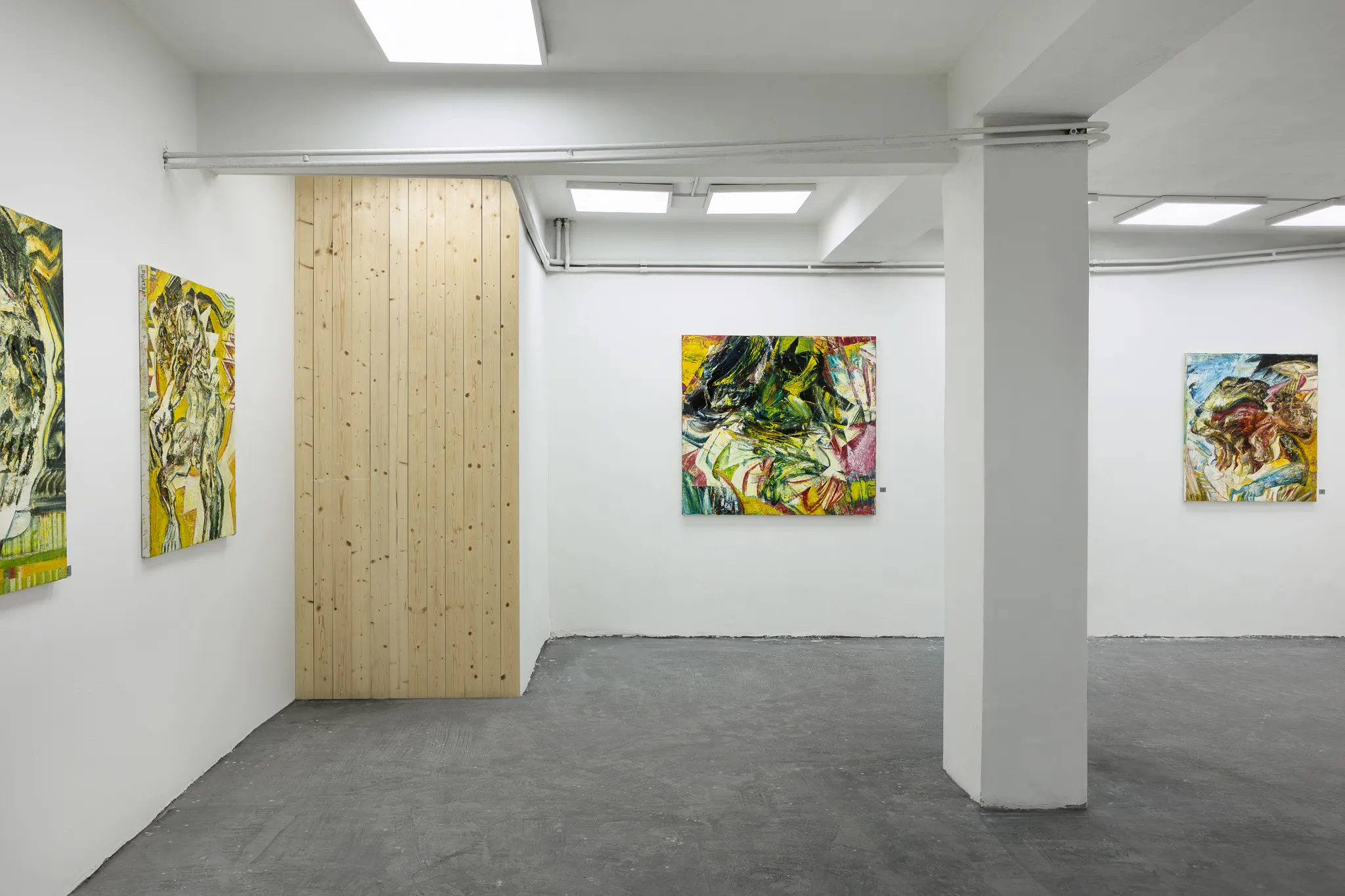
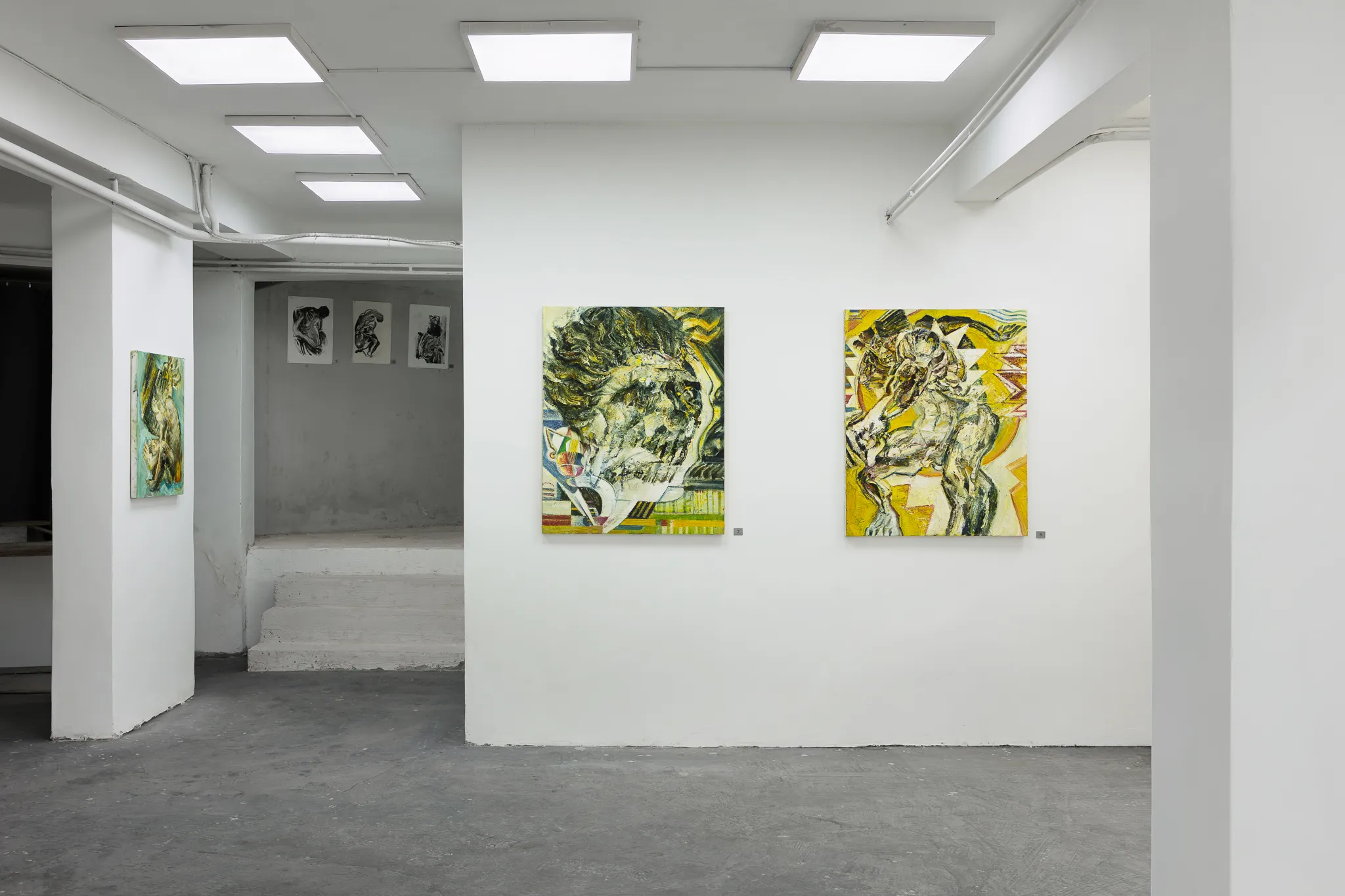
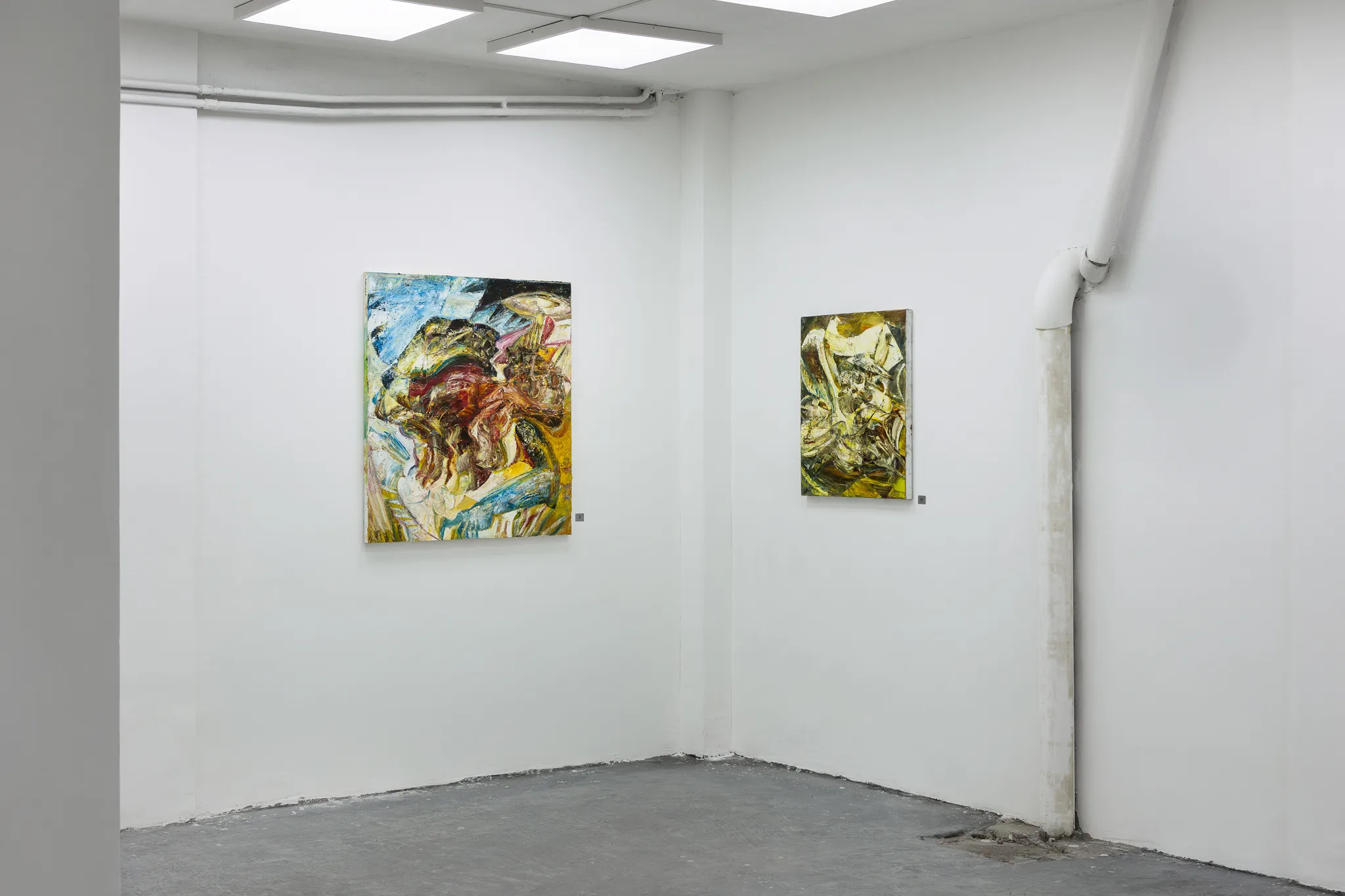
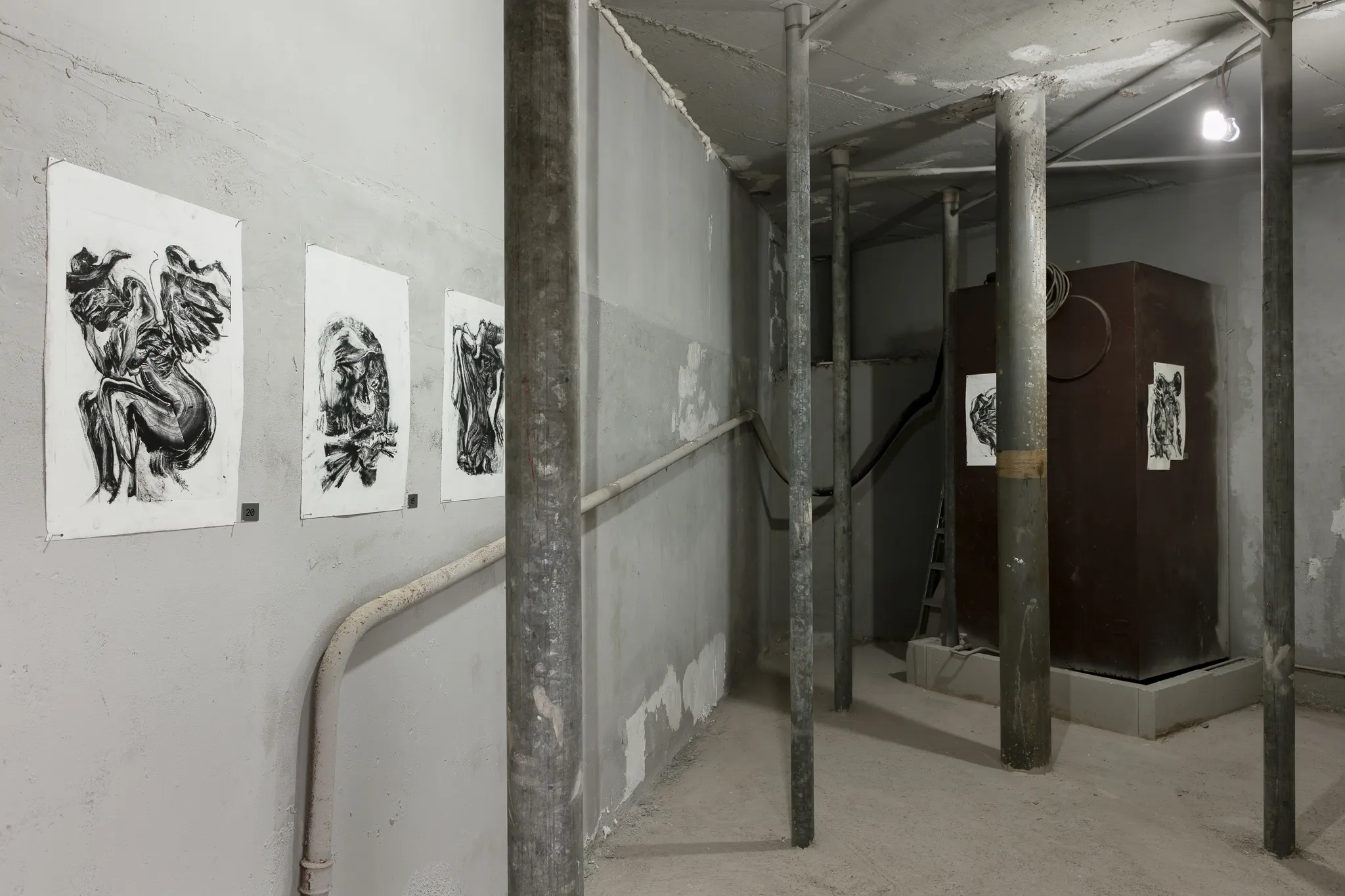
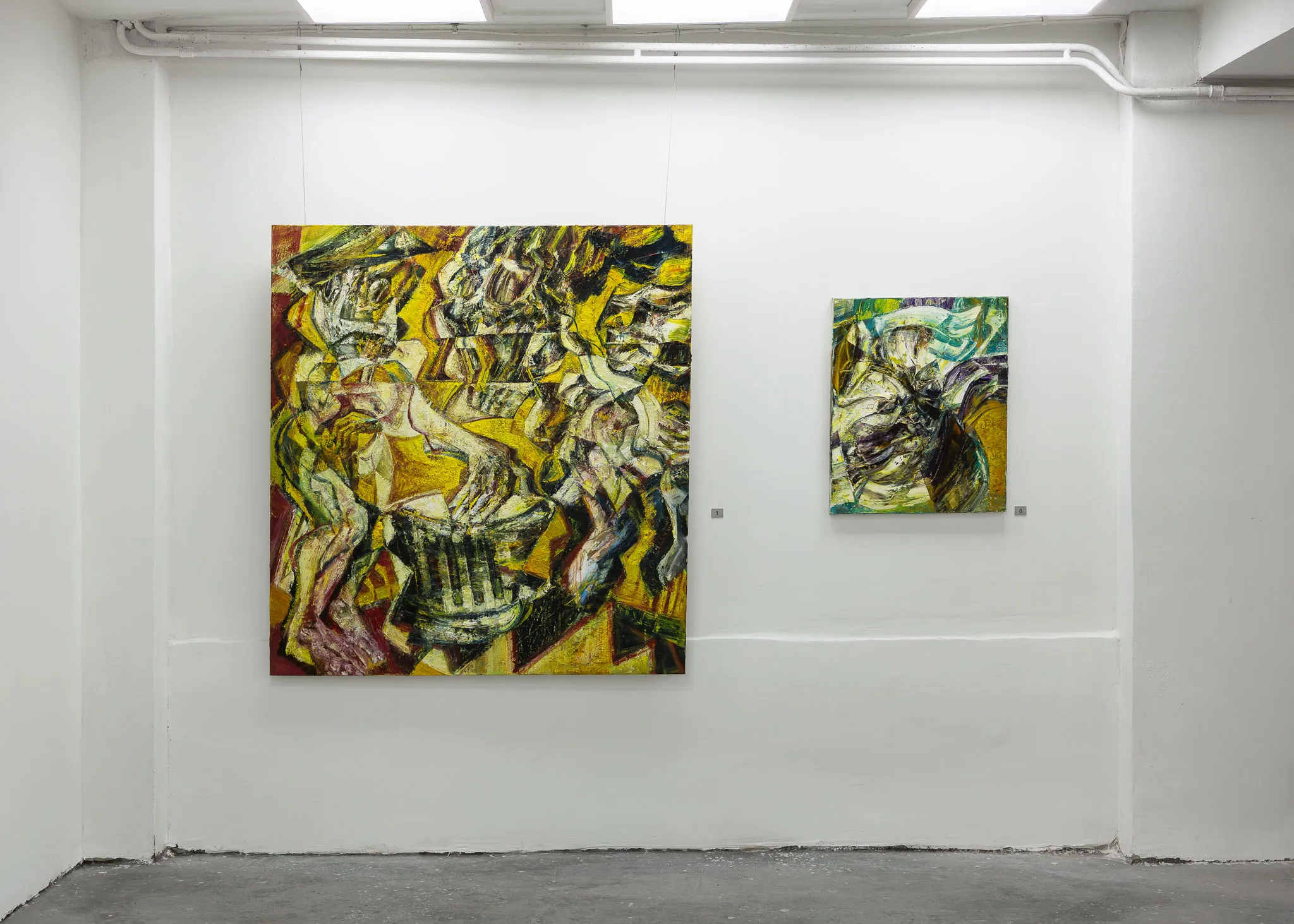
The solo exhibition of Zacharias Papantoniou introduces the viewer to a pictorial universe in which the image appears as an event of genesis —as a field of incessant emergence, transformation, and suspension of form. In his work, painting constitutes a process through which the world regains density, ambiguity, and corporeality. His practice unfolds as a dialogue between the formless (informal) and the recognisable, within which colour and gesture seek their own internal legitimation through drawing, while chance emerges as an essential driving force of the visual process —the catalyst through which the image is continuously constructed, deconstructed, and reconfigured. In this sense, the artist’s painting transcends the limits of a formal exercise and assumes the character of a radical testing of visibility itself, through its unrestrained, temperamental, and almost anarchic expressivity. At the core of his work lies a continuous interweaving of control, surrender, intention, event, consciousness, and the unconscious. For Papantoniou, chance constitutes a productive force capable of propelling the image beyond its initial boundaries. Contingency is gradually transformed into the destiny of form: each trace, each brushstroke, each gestural deviation claims its place within the work, entering into a complex economy of forces. Form thus emerges as the result of collision, erosion, folding, and provisional synthesis —as a phenomenon in constant motion. Particular importance is also given to the way in which the painter approaches time. His interest focuses on the construction of a field of density, within which individual elements operate simultaneously and co-shape an almost timeless representation of a deeper human identity. His compositions expand across multiple temporalities, without being exhausted in the description of a specific moment. His painting produces an experience of synchronicity, where memory, matter, gaze, and narrative coexist in a state of perpetual rearrangement. This density constitutes an essential ontological condition of the image, inviting the viewer to remain within the multiplicity of possible readings. At the centre of this visual world, the human figure persistently reappears as a bearer of multifaceted meanings and dense existential tensions. Papantoniou renders his entities in a state of multiplicity, where the figure condenses primordial qualities through a contemporary visual filter, while retaining at its core an existential anxiety. His figures seem to carry a memory deeper than individual experience, as if emerging from a pre-logical or post-logical field, where interpretations proliferate and intertwine inseparably. His painting thus operates as a process of reconstructing the human, revealing its inner complexity and the continuous fluidity of its existence. The artist works with a flowing expressive energy, while the very process of creation constitutes a form of deep bodily engagement —so intense that the body reaches its limits when the work “breathes together” with it. The rhythm of the work shifts organically, following the internal demands of the painting. His practice is formed in stages as an event of rhythm, intensity, and exhaustion —as an act inscribed equally on the canvas and in the body of the creator. In this way, Papantoniou’s work reintroduces into contemporary Greek painting a conception of gesture with a ritual dimension: a rhythm through which the image acquires breath and inner pulse. On a strictly formal level, his painting is structured through a highly gestural practice, where large, sweeping brushstrokes inscribe upon the surface a dense and nervous rhythm. The chromatic matter is worked as a viscous mass, often acquiring an almost oppressive density, as if the surface itself bore traces of internal pressure, accumulation, and unrest. In some works, this material condenses into tighter morphological structures, where entities are formed with greater cohesion and acquire a heavy, almost sculptural volume. In others, the drawing remains more open, with forms dispersing, fragmenting, and leaving the image in a state of suspension, where the recognisable and the indeterminate dynamically coexist. The composition is thus articulated through alternations of density and diffusion, contraction and release, endowing the surface with a pulsating quality in which form does not stabilise but continuously negotiates its appearance. One could say that his works bear the marks of a process of immersion and deepening into something sacred and cathartic. This approach is linked to a Neoplatonic conception of the artist as a conduit —as a subject that comes into contact with something beyond individual control. Imagination, organically bound to the unconscious, guides the image in an almost metaphysical manner, allowing the work to acquire its own internal life. In this way, the painting of Zacharias Papantoniou attains essential gravity: it becomes the field where matter fissures, form remembers, and the world re-emerges, surrendered to the enigmatic destiny of chance.
Photography By *Sotiris Zapantiotis